
AI Voice Assistant for Business
An AI voice assistant for business helps companies automate conversations, improve customer experience, and streamline daily workflows. Modern AI voice assistant technology combines speech recognition, natural language understanding, and machine learning to create intelligent systems that interact with users in real time.
An AI voice consultant can understand context, respond naturally, and integrate with business platforms. This makes it possible to deploy enterprise AI voice agent solutions that support teams, automate routine communication tasks, and enhance digital services.
Organizations across industries are adopting voice AI assistants to build smarter interfaces between people and technology. From internal automation to customer-facing interactions, an AI-powered voice assistant enables businesses to create efficient and scalable conversational experiences.
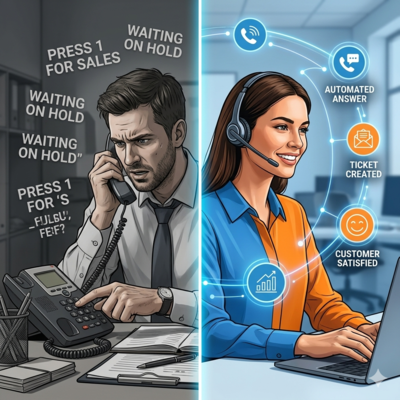
What Is an AI Voice Assistant

An AI voice agent is a software system that enables natural spoken interaction between humans and machines. Using conversational voice AI, the assistant can recognize speech, interpret intent, and respond with human-like audio.
Modern assistants are powered by advanced natural language processing models and speech synthesis technologies. This allows a voice AI assistant to understand questions, provide answers, execute tasks, and support automated workflows. Key capabilities include:
- Speech recognition that converts spoken language into text
- Natural language understanding that interprets meaning and intent
- Text-to-speech synthesis for natural spoken responses
- Context retention across multi-turn conversations
For businesses, an AI voice consultant acts as a digital interface that connects users with services, data, and systems. It can guide users through processes, retrieve information, or help complete tasks faster.
The foundation of these systems is conversational voice AI, which enables assistants to process complex queries and maintain contextual conversations. Modern assistants rely on adaptive learning models to deliver more accurate and helpful responses.
Companies often deploy an enterprise AI voice assistant to improve internal productivity and customer interactions. These solutions provide scalable voice interfaces that work across websites, apps, and enterprise systems.
How AI Voice Assistants Work
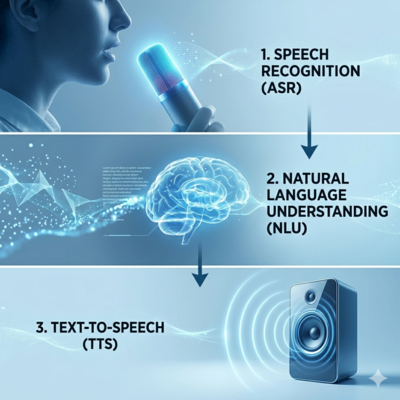
Behind every AI voice consultant platform is a sophisticated technology stack that combines multiple AI components.
The process follows three core steps:
- Speech recognition converts spoken language into text
- Natural language understanding interprets meaning and determines user intent
- Text-to-speech technology generates a natural spoken response
An AI voice assistant software solution connects these technologies within a unified platform that manages conversations, processes requests, and delivers intelligent responses.
Most companies deploy a voice AI platform that integrates speech models with business data and applications. This allows the AI voice agent software for business to access information, trigger processes, and automate tasks.
An AI voice automation platform can connect to CRM systems, databases, and enterprise tools, enabling the assistant to retrieve information, update records, or guide users through automated processes.
When integrated with existing systems, an AI voice assistant integration layer ensures seamless communication between the voice interface and the company’s infrastructure. The result is a powerful AI conversational voice platform that supports real-time conversations and intelligent automation.
Enterprise AI Voice Assistant Solutions
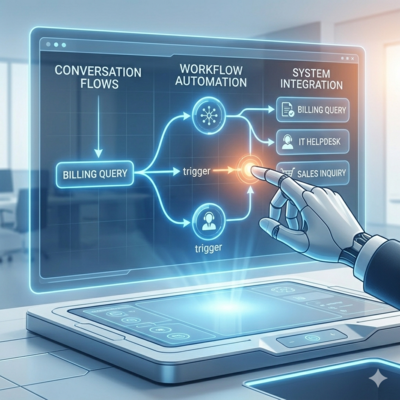
Businesses increasingly deploy enterprise AI voice assistant solutions to create scalable voice interfaces across their digital ecosystem.
An enterprise voice AI platform allows organizations to implement conversational technology across multiple channels and services. These platforms provide:
- Centralized management and analytics
- Tools for custom conversation flow design
- Workflow automation capabilities
- System integration with enterprise infrastructure
With the right voice AI solution, companies can build intelligent assistants that support employees, customers, and digital services. A typical conversational voice platform includes tools for conversation design, workflow automation, and system integration, making it possible to customize voice interactions for specific business scenarios.
AI voice assistant software for business gives organizations a practical framework for scaling voice automation across departments, products, and customer-facing services.
AI Voice Assistant Use Cases

An AI voice assistant for business applies across many operational scenarios. Companies deploy voice assistants to simplify processes, improve user experiences, and automate repetitive tasks. Common use cases include:
- Automation. AI voice automation creates voice-driven processes that guide users through tasks or provide instant access to information
- Digital assistants. A voice AI assistant acts as a conversational interface, allowing users to interact with applications using natural language
- Conversational AI. Assistants handle multi-turn dialogues, maintaining context to deliver relevant and accurate responses
AI workflow automation. Combining conversational capabilities with workflow automation, conversational AI voice assistants reduce manual work and improve productivity
Organizations also deploy assistants to support internal operations. Employees can use an AI-powered voice assistant to retrieve data, manage tasks, or interact with enterprise systems more efficiently.
Benefits of AI Voice Assistant
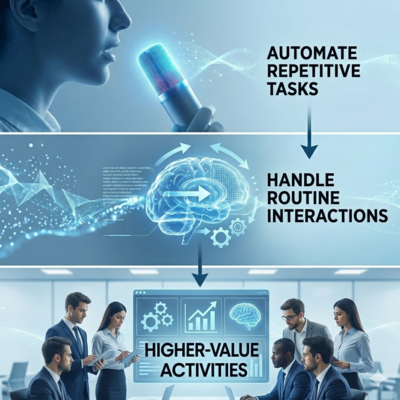
AI voice automation provides several strategic advantages for businesses:
- Accessibility. A voice AI assistant allows users to interact with systems naturally, without navigating complex menus or interfaces
- Efficiency. An AI speech assistant automates repetitive tasks and handles routine interactions, freeing teams to focus on higher-value activities
- Scalability. With a voice AI automation platform, companies can support thousands of interactions simultaneously without increasing operational complexity
Better user experience. A well-designed voice AI platform enables natural conversations that feel intuitive and responsive
AI Voice Assistant Integrations

To deliver real value, an AI voice assistant platform must integrate with existing business systems. Through AI voice assistant integration, companies can connect voice assistants with CRM platforms, enterprise databases, and digital services, ensuring the assistant can access relevant information and execute tasks.
Key integration capabilities include:
- Connecting to CRM systems and enterprise databases
- Triggering automated processes and updating records
- Supporting dynamic, context-aware conversations
- Operating across websites, apps, and enterprise platforms via a voice AI platform for business
Many organizations implement an AI voice automation platform that acts as a central hub for managing voice interactions and workflows. By combining conversational intelligence with enterprise integration, businesses can deploy scalable and intelligent AI speech assistant solutions.
Industries
Retail
Retail companies use AI voice assistants to enhance digital services, provide product information, and support automated workflows.

Healthcare
Healthcare providers deploy voice AI assistants to improve patient engagement and simplify access to information.

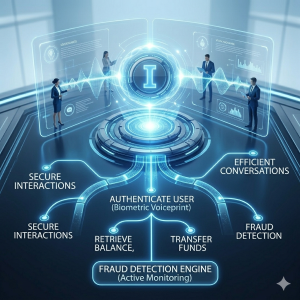
Fintech
Financial technology companies use enterprise voice AI platforms to create secure and efficient conversational interfaces.
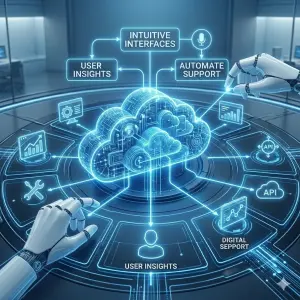
SaaS
Software companies implement AI voice assistant platforms to provide intuitive user interfaces and automate support processes.
FAQ
What is an AI voice assistant for business?
An AI voice assistant for business is a conversational AI system that enables companies to automate interactions, streamline workflows, and provide intelligent voice-based interfaces for digital services.
How does an AI phone assistant work?
An AI voice assistant uses speech recognition, natural language processing, and machine learning to understand spoken requests and generate natural responses.
Can AI automate customer support calls?
Yes, through AI voice assistant integration, companies can connect assistants with CRM systems, databases, and enterprise platforms to automate customer support calls and workflows.
What is AI call center automation?
AI call center automation uses voice AI agents to handle inbound and outbound calls, route inquiries, retrieve information, and resolve customer issues without human intervention.
Can AI voice assistants handle sales calls?
Yes, AI voice assistants can conduct sales calls by qualifying leads, presenting information, answering questions, and guiding prospects through automated conversation flows.


